-
Mon To Sat 10:00 am To 7:00 pm
-
Ayodhya nagar, Nagpur, Maharashtra.
×
Request Sent a Appointment
Speciality
Autologous Chondrocyte Implantation (ACI)
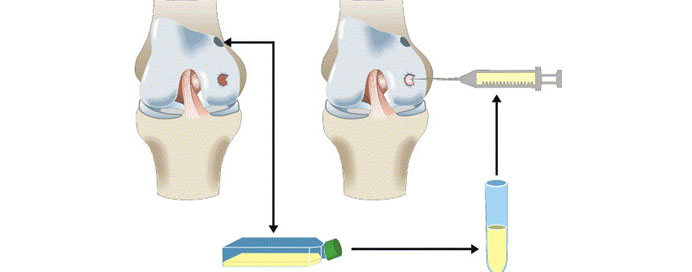
Autologous Chondrocyte Implantation (ACI) is an advanced regenerative procedure used to repair cartilage defects in the knee and other joints. This technique involves harvesting a small sample of the patient’s own cartilage cells (chondrocytes), growing them in a laboratory to increase their number, and then implanting them back into the damaged area. ACI is particularly beneficial for young, active patients with focal cartilage defects who want to restore joint function and delay the need for total knee replacement. Since the patient’s own cells are used, the procedure offers a biological repair that integrates well with the surrounding tissue, providing long-term durability.
Indications (When ACI is Needed)
Focal cartilage defects caused by injury or osteochondritis dissecans.
Persistent knee pain and swelling not responding to conservative treatments.
Patients under 50 years old with good joint stability.
Active individuals wanting to maintain sports and physical activity.
Procedure Overview
Cartilage Biopsy – A small piece of cartilage is removed arthroscopically.
Cell Cultivation – Chondrocytes are cultured in a lab for 4-6 weeks.
Implantation – The cultured cells are reimplanted into the damaged area using a protective membrane.
Rehabilitation – Gradual recovery with physical therapy.
Advantages of ACI
Uses the patient’s own cells for natural cartilage repair.
Prevents further joint degeneration and delays arthritis progression.
Long-term durability with good integration into the joint.
Restores mobility and reduces pain effectively.
Post-Surgical Recovery & Rehabilitation
Non-weight-bearing for 6-8 weeks to allow cell integration.
Physical therapy begins early for joint mobility.
Gradual return to full activity in 6-12 months.
Possible Risks & Complications
Overgrowth of cartilage (hypertrophy).
Graft failure or incomplete integration.
Joint stiffness or prolonged recovery.
