-
Mon To Sat 10:00 am To 7:00 pm
-
Ayodhya nagar, Nagpur, Maharashtra.
×
Request Sent a Appointment
Speciality
Elbow Joint
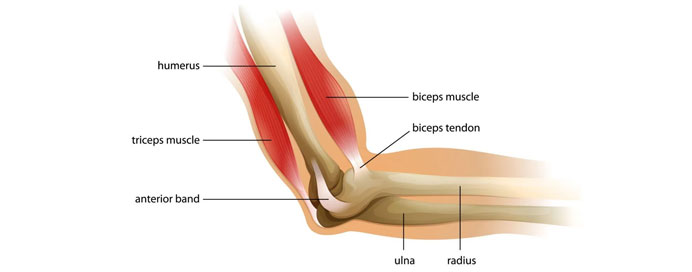
The elbow joint is a hinge joint located where the humerus (upper arm bone) meets the ulna and radius (forearm bones). It is primarily responsible for flexion (bending) and extension (straightening) of the forearm, allowing for essential movements like lifting, pushing, pulling, and throwing. The elbow is a relatively simple yet strong joint that relies on a combination of ligaments, tendons, and muscles to ensure stability and smooth motion. The joint is surrounded by bursae (fluid-filled sacs) that reduce friction and protect the surrounding soft tissues. Although the elbow is less prone to wear and tear compared to more mobile joints like the shoulder, it can still suffer from overuse injuries (e.g., tennis elbow, golfer’s elbow), fractures, dislocations, and ligament injuries.
Anatomy and Structure
Bones Involved: Humerus (upper arm), Ulna, and Radius (forearm).
Type of Joint: Hinge joint, allowing for bending and straightening.
Stabilizing Structures: Ligaments, tendons, muscles, and bursae.
Movements and Function
Flexion and extension of the forearm.
Pronation and supination (rotating the forearm, e.g., turning the palm up or down).
Essential for tasks like lifting, pushing, throwing, and carrying objects.
Common Injuries and Conditions
Tennis Elbow (Lateral Epicondylitis): Overuse of forearm muscles leading to pain on the outer elbow.
Golfer’s Elbow (Medial Epicondylitis): Overuse of forearm muscles causing pain on the inner elbow.
Elbow Fractures: Broken bones around the elbow, often from falls or direct trauma.
Elbow Dislocation: When the bones of the elbow are displaced, often after trauma.
Bursitis: Inflammation of the olecranon bursa, causing swelling and pain at the back of the elbow.
Ligament Injuries: Sprains or tears in the ulnar collateral ligament (UCL), often seen in athletes (e.g., baseball pitchers).
Arthritis: Degeneration of the joint’s cartilage, leading to stiffness and pain.
Prevention and Care
Proper Technique: Using correct posture and movement mechanics during sports or manual labor to avoid strain.
Strengthening Exercises: Focus on the forearm and shoulder muscles to support the elbow.
Stretching: Regular stretching of the elbow and forearm muscles to maintain flexibility.
Avoid Overuse: Taking breaks during repetitive activities to prevent overuse injuries.
