-
Mon To Sat 10:00 am To 7:00 pm
-
Ayodhya nagar, Nagpur, Maharashtra.
×
Request Sent a Appointment
Speciality
Osteochondral Autograft Transfer System (OATS)
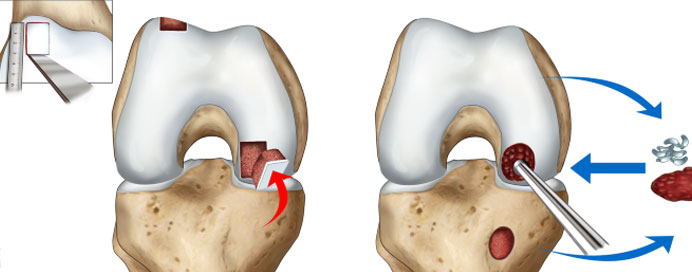
The Osteochondral Autograft Transfer System (OATS) is a surgical technique used to repair damaged cartilage in the knee and other joints. It is commonly performed on patients with focal cartilage defects, typically caused by injury, osteochondritis dissecans, or early-stage arthritis. The procedure involves harvesting healthy osteochondral (bone and cartilage) plugs from a non-weight-bearing part of the joint and transplanting them into the damaged area. This restores the joint surface with natural, living cartilage, improving function and reducing pain. OATS is often recommended for younger, active patients with localized cartilage damage who want to avoid or delay more extensive procedures like total knee replacement.
Indications (When OATS is Needed)
Focal cartilage defects (small to medium-sized isolated cartilage damage).
Osteochondritis dissecans (OCD) causing cartilage and bone deterioration.
Post-traumatic cartilage injuries from sports or accidents.
Patients under 50 with good overall knee stability and alignment.
Persistent knee pain and swelling not responding to conservative treatments.
Procedure Overview
Preoperative Imaging – MRI and X-rays assess the cartilage defect and joint condition.
Anesthesia – The procedure is performed under general or spinal anesthesia.
Cartilage Harvesting – A cylindrical bone-cartilage plug is taken from a healthy, non-weight-bearing area of the knee.
Defect Preparation – The damaged cartilage is removed, and a matching hole is created.
Graft Transplantation – The healthy plug is inserted and secured, ensuring seamless integration.
Closure & Recovery – The incision is closed, and rehabilitation begins.
Advantages of OATS
Uses the patient’s own cartilage (autograft) for superior healing.
Restores the natural joint surface and reduces pain.
Provides long-lasting results for small to medium-sized defects.
Allows return to sports and physical activities.
Prevents further cartilage degeneration and delays arthritis progression.
Post-Surgical Recovery & Rehabilitation
Non-weight-bearing with crutches for 6-8 weeks to allow healing.
Physical therapy starts early to restore mobility and strength.
Gradual return to full activity over 3-6 months.
Possible Risks & Complications
Donor site pain or discomfort.
Incomplete graft integration or failure.
Infection or joint stiffness.
Limited effectiveness for large defects.
