-
Mon To Sat 10:00 am To 7:00 pm
-
Ayodhya nagar, Nagpur, Maharashtra.
×
Request Sent a Appointment
Speciality
Wrist Joint
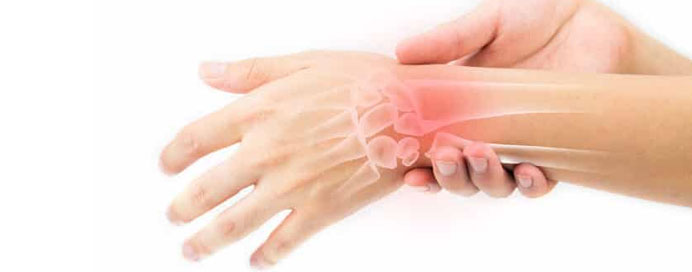
The wrist joint is a highly versatile and complex joint that connects the forearm to the hand. It allows for a wide range of motion, including flexion, extension, radial deviation (moving the hand toward the thumb), ulnar deviation (moving the hand toward the little finger), and rotation. The wrist is made up of several bones, including the radius and ulna (forearm bones) and the eight carpal bones (which form the wrist). These bones are held together by a network of ligaments and tendons that ensure both stability and mobility. The wrist also contains tendons that control hand and finger movements, along with bursae that reduce friction. Due to its constant use in daily activities like typing, lifting, and gripping, the wrist is prone to overuse injuries, such as carpal tunnel syndrome, tendinitis, and sprains. Proper wrist health is essential for performing tasks that involve fine motor skills and strength.
Anatomy and Structure
Bones Involved: Radius, Ulna, and 8 carpal bones (e.g., scaphoid, lunate, pisiform).
Types of Motion: Flexion, extension, radial deviation, ulnar deviation, and rotation.
Key Stabilizers: Ligaments, tendons, muscles, and bursae.
Common Movements and Function
Flexion: Bending the hand down toward the palm.
Extension: Straightening the hand back from a flexed position.
Radial Deviation: Moving the hand toward the thumb.
Ulnar Deviation: Moving the hand toward the little finger.
Rotation: Allowing the wrist to rotate for gripping and twisting motions.
Important for tasks: Writing, typing, lifting, gripping, and performing fine motor activities.
Common Injuries and Conditions
Carpal Tunnel Syndrome: Compression of the median nerve leading to pain, numbness, and tingling in the hand and wrist.
Tendinitis: Inflammation of the tendons, often caused by overuse or repetitive motion.
Wrist Sprains and Strains: Ligament injuries or muscle/tendon overstretching, commonly from falls or trauma.
Fractures: Breaks in the carpal bones, radius, or ulna, typically caused by falls or accidents.
Arthritis: Degenerative changes in the wrist joint, leading to pain and limited motion.
De Quervain’s Tenosynovitis: Inflammation of the tendons on the thumb side of the wrist.
Kienbock’s Disease: A condition where the blood supply to the scaphoid bone is disrupted, leading to its degeneration.
Prevention and Care
Proper Ergonomics: Adjusting workstations (e.g., typing posture) to avoid strain.
Wrist Exercises: Regular stretching and strengthening of the wrist and forearm muscles.
Avoiding Repetitive Motion: Taking frequent breaks to reduce stress on the wrist joint.
Protective Gear: Using wrist guards during sports or physical activities that involve risk of injury.
Good Posture: Keeping wrists in a neutral position during daily activities to reduce strain.
